'Should I buy now or wait?' is the question we hear most in 2026. The honest answer depends on what you want from the property and how long you plan to hold it. This article sets out both sides, the strengths and the risks, using official and well-known sources, so you can decide for yourself.
What the official numbers say
- The Dubai Land Department (DLD) reported AED 252 billion of real estate transactions in Q1 2026. That was up 31% year on year, across 60,303 transactions (+6%).
- In the same quarter, foreign investment reached AED 148.35 billion (+26%), and 29,312 new investors entered the market.
- Khaleej Times reported AED 286.43 billion in property sales across 79,229 transactions in H1 2026.
Demand has clearly been strong. That is not the same as saying prices can only go up.
The counter-argument: supply
The National quoted Fitch Ratings' Anton Lopatin saying about 120,000 units were scheduled for handover in Dubai in 2026, compared with 30,000 in 2024. In 2025 Fitch also warned that a widening supply-demand gap could lead to a price correction of up to 15%.
Not everyone agrees with that supply estimate. Engel & Völkers' mid-2026 review says actual handovers in 2025 were only about 42,000 units, even though more than 150,000 were launched. It expects around 83,000 completions in 2026 and notes that actual numbers usually come in below plans. It also points to projected population growth of 175,000 to 225,000 residents in 2026, which absorbs part of the new supply.
Forecasts for prices and rents
- Cushman & Wakefield Core (via The National): price growth moderates to around 5% to 8% in 2026, and rents stabilise or grow at a low single-digit rate.
- Engel & Völkers: the market is entering a more balanced phase, with growth 'more modest and uneven' depending on location, property type and quality.
- Bayut: H1 2026 data showed resilience despite 'a complex global and regional economic backdrop'.
So, is it a good time?
It can make sense if you:
- Plan to hold for five years or more
- Are buying to live in, or to rent out at a realistic yield, rather than to flip
- Choose an established developer in an area with real end-user demand
- Want UAE residency. ICP lists the Golden Visa threshold as AED 2 million in property, and Khaleej Times reported in April 2026 that Dubai dropped the AED 750,000 minimum for the 2-year visa for sole owners.
Be careful if you:
- Are counting on a quick pre-handover flip in an area with heavy supply
- Have a payment plan that would strain you if handover is delayed or rents soften
- Have not compared the price per sq ft with ready homes nearby
Smart strategies for a 'balanced' market
- Put developer and location first. Established master communities such as Dubai Hills Estate and The Valley by Emaar are good examples.
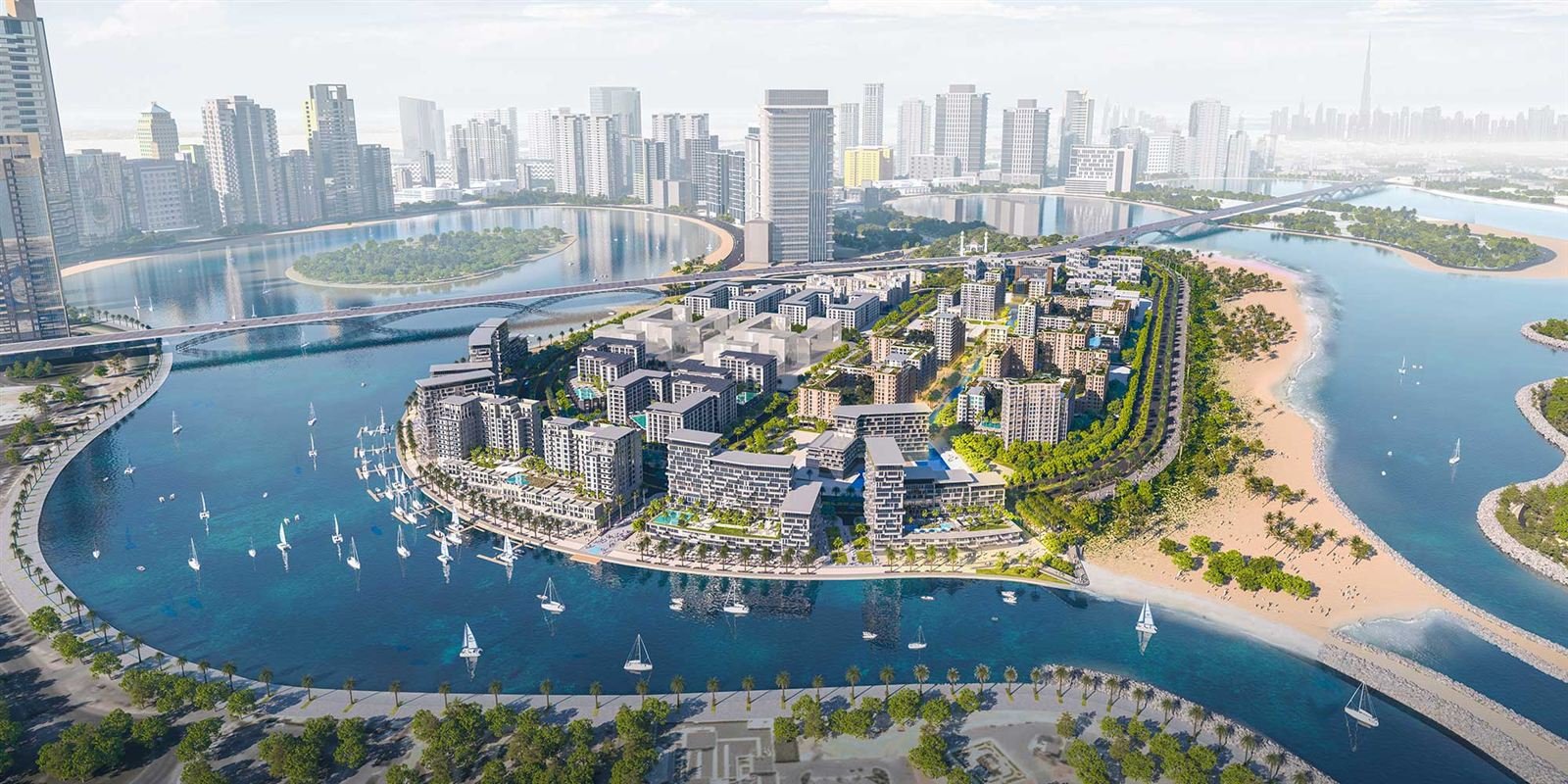
- Look at Sharjah. Entry prices are lower. Al Mamsha starts from AED 629,000 according to our project page, and Maryam Island is on the waterfront.
- Negotiate the payment plan, not just the price. Developers often have more room there at launch.
- Underwrite net yield after service charges, not an optimistic gross figure.
Frequently asked questions
Will Dubai property prices fall in 2026?
Forecasts differ. Fitch warned of a correction of up to 15%, while Cushman & Wakefield Core forecast 5% to 8% growth. Results are likely to vary a lot by community.
Should I wait for prices to drop?
Timing the bottom is very hard. Focus on paying a fair price for the area and on a payment plan you can comfortably manage.
Is Sharjah a good alternative?
For a lower entry price and a reasonable yield, yes. Bayut's 2025 report showed projected yields of 7.06% in Al Nahda and 6.17% in Aljada.
What is the biggest risk in 2026?
New supply in areas with many projects, which can weigh on rents and resale prices.
Want an honest second opinion on a specific project before you commit? Alroya Almomayaza Real Estate Brokers will compare prices and yields for you, without the hype. WhatsApp us at +971 58 558 9894.